Friday, January 26, 2007

Mediation and Gangs -- Perfect Together!


Two Rival District Gangs Declare Truce To Long Standing Beef Through Third Party - Metro:
"Two feuding neighborhood crews responsible for numerous violent confrontations in the Southeast Washington D.C. area have finally called a truce with the help of Peaceoholics, a grassroots nonprofit organization. "

Now this is effective mediation! The incidents stirring the conflict between these two rival crews resulted in beatings beyond recognition, a hijacked city bus, the death of a sixteen year old...

Few people would take up this challenge, but the Peaceoholics did. They're a grassroots organization in DC devoted to helping promote academic and social growth among at risk youth and their families.


How did they manage it? First they took the girls on a mediation retreat, then the boys -- away from the city, to a safer environment free of weapons.

Then they made talk work. Great job, Peaceoholics!

“I think the truce will last as long as nobody fakes and as long as everyone knows their boundaries,” said 16-year-old Damisha Carter of Woodland Terrace.

Wednesday, January 24, 2007

Diversity Film Showing Causes Controversy

The Eversham School District is under attack for showing "That's a Family!" What's your reaction?

I agree with this comment by Blue Jersey:
Blue Jersey: Covering NJ like a rug: "Some parents seem to be projecting their own predjudices onto their children, confident that like them, their children will also find the concept of same-sex couples outrageous. I tend to think we give children too little credit. They already have friends who live in married, divorced, and single parent families, interracial and mixed-religion familes, adoptive parents, grandparents as guardians, and yes, same-sex families. Teaching them that all their classmates are loved by their parents is not difficult for them to understand, though the same can't be said for some of their parents."

You can see the NBC news clip and link to the film's website at BlueJersey, too.

Tuesday, January 16, 2007

Diversity at the Dining Room Table

Pew Research Center: Guess Who's Coming to Dinner: "22% - Guess Who's Coming to Dinner

More than one-fifth of all American adults (22%) say that they have a close relative who is married to someone of a different race, according to a new Pew Research Center survey."

Monday, January 15, 2007

What does your culture and heritage and identity mean to you as a citizen living in New York?

This amazing essay won second prize in the Celebrate Diversity! Essay Contest. Congratulations and thank you, Elizabeth Holmes, for sharing your story.

Culture, Identity, and Heritage are three main themes that have consumed me for at least twelve of my fourteen years. Exploring and developing these themes is an emotional and challenging adventure that is an important part of my life. I have always been an introspective and reflective person. As an overseas Chinese who was adopted by an American family when I was three months old, I felt from the beginning of my life that I had a lot to think about.

My name is Elizabeth Li-Anna Qiuju Gaeta Holmes. That's a long name for a three month old infant. From the very beginning, my American parents were very sensitive to include in my name all my cultural heritages. My first name, Elizabeth, is the name of my Scott-English paternal grandmother and god­mother. Li-Anna is my middle name. Li, which means Beautiful in Chinese, is the adjective modifying both the word An (which means peace in Chinese) as well as Anna, the Italian name of my mother's sister and great aunt. Qiuju, (which means Chrysanthemum in English) is the name given to me by my birthmother. Gaeta is my adoptive mother's surname and Holmes is my adoptive father's surname.

When I was two and a half years old, I looked at my Mom's eyes, which are brown, and then my eyes which are black. I was very upset. I told my Mom I didn't like looking different than she did. 'When am I gonna get brown eyes? I don't wanna be Chinese!" My mother pointed out that my Dad has blue eyes and my brother has green eyes. Even though we all look different, we are one family. This was just the beginning of my noticing racial differences and wondering who I was.

When I was three years old, my family and I joined the Grace Christian Church, a church that is multi-cultural, but predominantly oversees Chinese. There I met Asian adult role-models and made several Asian and Caucasian friends. Being at this church, I experienced certain aspects of the Chinese culture, such as language, food, and traditions. However, I feel similar to these oversees Chinese, but, in other ways I feel extremely different. After all, I am different. I am not only Chinese but I am also an adoptee and I live in an Italian-Scott-English American family.

My family and I are members of an organization called FCC (Families with Children from China). Every year we attend Chinese Culture Day, an event sponsored by FCC. Here I get to meet other adoptees from China, who live in American households. We celebrate and learn about Chinese culture and at the same time I get to share concerns, feelings, and issues related to adoption.

When I was nine years old, my family and I returned to China with a tour group consisting of thirty other Chinese-adopted children and their families, While I was in China, I experienced the beauty of the country. I also visited the homes of native Chinese families and schools. I saw and realized how fortunate and blessed I was to be living in America, "the Land of the Free."

Before this trip, I took American freedom for granted and did not truly appreciate what it meant. As a nine year old girl, I was allowed to travel from New York City, to China. However, I was almost prevented from being reunited with my Chinese foster mother, Cheng. Cheng she was not allowed to travel from one city to another without permission from her employer.

For some reason, or perhaps for no reason, the employer refused to give permission. It did not even matter that Cheng was willing to travel to visit me, even on her day off. It took a month and a lot of persuasion from my parents, the tour director and her advisor to get the employer to change her mind.

Luckily for me I live in the capitol city of diversity, New York. I love being a New Yorker. I love going to Broadway shows, museums, parks, concerts, and just walking around, When in New York I feel I can walk around freely, dress as myself, and be accepted as me, I express my identity and develop my sense of self through many personal avenues, I enjoy music, (cello and piano), sports, (soccer, gymnastics, swimming, and skiing), participating in charitable events, and community service. I also explore my interests with clubs at school (in middle school, I participated in GLOBE, which is a program of science and I was on a Math Team,) I've performed at Carnegie Hall in a Borough-Wide orchestra, I play the cello in my school orchestra and I am part of an advanced orchestra,

There is still so much to explore and think about regarding my culture, heritage. and my Identity, The culture and diversity of New York City fosters and encourages this kind of exploration. Everyday I find out just a little bit more about myself. I expect this journey of exploration will take a lifetime

Elizabeth Holmes, Age 14

Petrides School

October, 2006

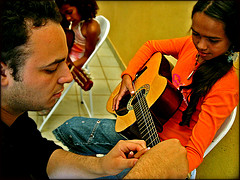
Photo by MYKAUL

Sunday, January 14, 2007

At-Risk Youth: Promising Practices & Current Research Videoconference from OJJDP

************************************************

Videoconference -- "Addressing the Needs of Juvenile Status Offenders and Their Families"

January 18, 2007

********************************************************

On Thursday, January 18, 2007, 2:00-4:00 (eastern time), the Office of Juvenile Justice and Delinquency Prevention (OJJDP) will present the videoconference "Addressing the Needs of Juvenile Status Offenders and Their Families."

In 2004, 18 percent of all juvenile arrests involved status offenses -- nondelinquent, noncriminal acts that are considered illegal only for juveniles (e.g., truancy, running away, underage drinking, curfew violations, being "ungovernable"). Research has clearly linked status offending behavior with later delinquency.

The videoconference is designed to raise awareness about status offending and to highlight legislative reforms, policies, programs, and practices that have shown promise in effectively intervening with status offenders and their families and steering these youth toward a positive future. The target audience includes policymakers, judges, attorneys, and law enforcement; juvenile justice, child welfare, social services, and other youth-serving agencies.

The videoconference will be available for online viewing from desktop computers and group viewing at satellite download sites.

Registration is free at http://www.trc.eku.edu/jj/default.asp.

===========================================================

Two Ways to Celebrate the Legacy of Martin Luther King


"We must learn to live together as brothers or perish as fools."—Martin Luther King, Jr.

You can see me on the right hand side of the reflecting pool. It's a day I'll never forget. It was August and the sun beat down on us. Speakers droned on. I was young and it was hard to stay focused. But when Rev. King spoke, we hushed. We knew he was making history.

Here are two resources I hope you'll take advantage of, and pass along to others.

FREE - Federal Resources for Educational Excellence - offers this special collection of photos, documents, and original recordings of Rev. King's major speeches. Click on History and Politics Outloud to listen to any of his speeches.

I received this invitation from The Teaching Company and I pass it along to you. Their lectures always teach me something, so I'm looking forward to this one.

Join Professor Dalton on this intriguing examination of Dr. King's personal quest for freedom. You'll explore how this courageous Baptist minister interpreted Christ's concern for spiritual freedom and applied the nonviolent teachings of Christ and Mahatma Gandhi to race relations in the United States in the 1960s. Hear how Dr. King also developed the connection between freedom and justice that ultimately inspired history-making events such as the Montgomery bus boycott and Rosa Parks' refusal to give up her seat on a public, segregated bus. These events, and others that Dr. King inspired, paved the way for the U.S. Supreme Court's decision declaring Alabama's—and thus the nation's—segregation laws unconstitutional.

Access your free lecture online between now and Wednesday, February 28, 2007. Please feel free to send the link to the lecture to friends who might also enjoy it. It is free for them as well.


Enjoy The Teaching Company Free Lecture

I hope you'll join me in spending some time reflecting on the principles and practices that Dr. King stood for.

Wednesday, January 10, 2007

Should parents fear mentors?


All the evidence indicates that young people who have at least one influential mentor in their lives are more likely to take positive risks that promote overall development and mental health. But fears about predators cause some parents to discourage mentoring relationships.

This article cites a study sponsored by SADD and Liberty Mutual Group that reflects this trend.

Charlotte Observer | 01/07/2007 | Should parents fear mentors?:
"Despite clear evidence of the positive effects of mentoring, 53 percent of teens say their parents discourage them from participating in organizations or activities where such mentoring might occur. One in five specifically cite parental concern for their personal safety."

The author, psychologist Stephen Wallace, national chairman and CEO of Students Against Destructive Decisions, Inc., contends that "the bogeyman effect" brought about by the media's excessive coverage of select child abuse incidents appears to be chilling mentoring relationships out of proportion to the risk. The benefits of mentoring are too important to lose to fear.

He argues that parents are wise to be wary, but they can take simple steps to ensure their children's safety.

1. Stay involved. Know who your teen spends time with, where they're going and what they're doing.

2. Get to know your teen's mentors. Working together will benefit your teen and give you a better sense of your teen's safety.

3. Encourage your teen's involvement in organizations that conduct employee or volunteer screenings and/or criminal and sexual offender background checks.

Photo by carf/CHILDREN AT RISK FOUNDATION

Is the Emphasis on Diversity Undermining Equality?

Here's a provocative post at MoneyLaw pitting diversity and equality. Using Michaels' new book, The Trouble with Diversity: How we Learned to Love Identity and Ignore Inequality, as his starting point, Jeff Harrison makes the argument that "In seeking diversity the search is on for what seems to be the least diverse candidates possible."

MoneyLaw: Race, Class and Diversity:
"Looking at the books we read, the TV shows we watch, and the lawsuits we bring, Michaels shows that diversity has become everyone’s sacred cow precisely because it offers a false vision of social justice, one that conveniently costs us nothing. The Trouble with Diversity urges us to start thinking about real justice, about equality instead of diversity. Attacking both the right and the left, it will be the most controversial political book of the year."
I haven't read the book, but the argument seems to be that while looking for candidates with diverse roots, employers look for similarity in education - the 'right' schools, attitudes, and lifestyle -- people who look different but think, talk, and act alike.

What's your experience?

Diversity History: Pepsi's Story in the 1940's


Read this fascinating article published recounting Pepsi's efforts to break down hiring barriers for African-Americans in the 1940s. You don't often get a glimpse of the internal politics around diversity, and almost never at how corporations handled it.

Daily Report:
"The rivalry between Pepsi and Coke, which started in the 1940s, is legendary in business. Less known is that a more important battle was being fought on the front lines of the cola wars at the same time: the struggle of African-Americans to gain access to professional jobs in major corporations." [More]

Saturday, January 06, 2007

Free MIT Education - We All Benefit From This Educational Philanthropy

I always wanted to go to MIT, and now I can! Hats off to MIT and the other 120 universities that have joined the OpenCourseWare movement.

Free MIT Education Just A Click Away, OpenCourseWare Offers Online 'Intellectual Philanthropy' From More Than 100 Universities - CBS News:
"By the end of this year, the contents of all 1,800 courses taught at one of the world's most prestigious universities will be available online to anyone in the world, anywhere in the world. Learners won't have to register for the classes, and everyone is accepted.

The cost? It's all free of charge.

The OpenCourseWare movement, begun at the Massachusetts Institute of Technology (MIT) in 2002 and now spread to some 120 other universities worldwide, aims to disperse knowledge far beyond the ivy-clad walls of elite campuses to anyone who has an Internet connection and a desire to learn."

I browsed through the MIT offerings and am amazed at the content already available -- whole courses from the syllabus to videos of the lectures and all the assignments. With a little self-discipline one could master a whole new field. As they note, though, some of the good stuff, like class discussions and feedback on assignments -- is missing.

But if you have a student bored with classes and ready for some bigger challenges, what could be better than a course from MIT. (And don't say Harvard...)

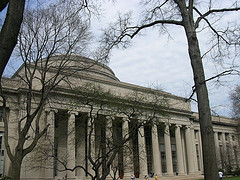
Photo by Adam Solomon

Wednesday, January 03, 2007

Mediation: Small Talk Pays Off

Victoria Pynchon on her Settle It Now blog posted a provocative article about the benefits of small talk in mediation. She used business examples. I wonder if the same results accrue in divorce or child custody or visitation mediations where the small talk has years of history. Any thoughts?

Small Talk and Separate Caucuses : Settle It Now Negotiation Blog: "Small Talk and Separate Caucuses

Most attorneys do not like to begin their mediated negotiations with a joint session and neither do many mediators. The reason most often given is everyone's desire to avoid a polarizing set of zealously adversarial presentations.

Work done by our neighborhood neuroscientists, however, suggests that avoiding joint sessions may deprive us of the 'small talk' necessary to put the parties into a collaborative, even generous mood." [More]

Tuesday, January 02, 2007

Keeping at-risk kids in school requires programs, not rhetoric


New Hampshire's governor wants to raise the compulsory school attendance age to eighteen. He hopes that this, combined with more alternative education programs, will reduce the dropout rate.

This article outlines the arguments for and against raising the age limit. It also profiles some of the strategies used to engage students at high risk for dropping out.

What do you think about raising the age to eighteen?

Keeping at-risk kids in school requires programs, not rhetoric - Boston.com:
"More than a dozen states, including California and Texas, already require students to stay until age 18. Opponents in New Hampshire agree the dropout rate should be reduced. But they say extra support and programs for struggling students must come first, and raising the compulsory attendance age without them would be pointless." [More]