Friday, February 23, 2007

Just who are these mediators, anyway?


Definition: A Mediator is a trained neutral party who assists parties in disputes to engage in a conversation about issues of dispute in a cooperative manner. The mediator guides the communication process ensuring that each person has a chance to be heard and express their understanding of the situation. Mediators help to clarify issues, facilitate negotiations, and serve as the scribe if an agreement is reached.

Note: In mediation, the parties not the mediator determine the final outcome of a mediation.

The NY Center's mediation program both staff and community volunteers mediate cases. To become a mediator a person must complete extensive training.

First, a mediator attends a Basic Mediation Training Course that meets NYS Unified Court System Office of Alternative Dispute Resolution Programs and Court Improvement Guidelines. That course serves as the foundation for a practicum and apprenticeship program. No one can become a certified mediator until they have completed the practicum and apprenticeship to the satisfaction of the supervisor.

In addition to the basic training, mediators learn to mediate more complex cases, such as civil court, parent/teen, child custody and visitation, by taking additional coursework. In addition, every mediator has an ethical obligation to keep their skills current by attending continuing education workshops and seminars.

The mediators who serve our community are educators, lawyers, mental health professionals, civil servants and concerned citizens with many different cultural and ethnic backgrounds.

Over the last decade, New York Center mediators provided more than 15,000 hours of pro/bono service to Staten Island residents.


If you would like to learn more about becoming a mediator, contact Kathy Vaughan, Director of Mediation Services.

Having Problems?! - Mediation can help!


• Neighbors play their music too loud every night. That’s not right for hardworking people.

The repair man didn’t fix the problem with the dryer, it still doesn’t work. I want my $ back or a new washing machine.


• I’m not happy with my son’s IEP. I want him to…No one is listening to me.

• When my ex visits with my children, s/he never lets me know where they is going.

These issues and many more can be resolved through mediation.

Mediation helps you to work on these problems with the other party in a safe, fair, and confidential manner. Mediation assists parties to work collaboratively to better understand each others' issues and make decisions that both parties agree will work.

Mediation is neither litigation nor arbitration. In mediation, parties themselves decide the outcome of the mediation. If they reach agreement , they craft the terms in writing.

Our staff will arrange an appointment convenient for both parties, provide space and a trained neutral mediator for the session. With the mediator's help, parties discuss the issues between them.

Court interpreters are also available for parties whose native tongue is not English.


For more information about mediation at its benefits, or to arrange a mediation to address a problem you have with a neighbor, landlord, family member -- really, anyone -- contact us at 718-815-4557 or visit us at
130 Stuyvesant Place, 4th Floor
Staten Island, NY 10301
Monday through Friday, 9 to 5

The Mediation Center receives funding from the NYS Office of ADR Programs and Court Improvement and the New York City Office of the Criminal Justice Coordinator.

How to resolve a complaint about your neighbor, landlord, family member or a merchant


New York Center Court Dispute Referral Center (CDRC) can help!

If you have a complaint against another person our staff can help you sort out your alternatives. Staff listens to the complaint, makes an initial evaluation, and explains the options you have and information you need for resolving the dispute.

Options might include the police, a community agency that specializes in your kind of problem, or one of our mediation programs.

Please note that the Community Dispute Resolution Center remains a neutral party. Staff does not take sides or represent any party when evaluating a complaint, providing a referral, or offering mediation services.

The New York Center for Interpersonal Development operates the Community Dispute Resolution Center for Richmond County.

For further information call 718-815-4557 and ask for the CDRC/Mediation staff.

Or, visit us at our offices at
130 Stuyvesant Place, 4th Floor
Staten Island, NY 10301
Monday through Friday 9 – 5
Click here for a map

Wednesday, February 21, 2007

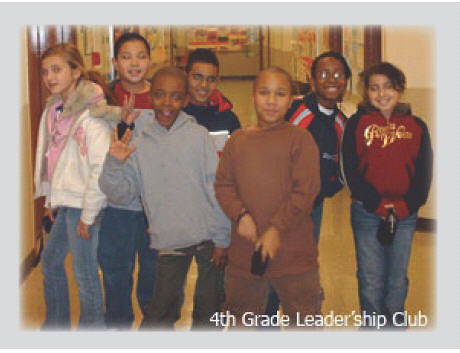
4th grade leadership club, PS 13

This link will open a pdf file of the PS 13 newsletter The students in the NY Center's after school program wrote and produced it and the articles cover many of their after school activities.

The leadership club (Aren't they a handsome crew!) was featured in an article by newsletter editor Clyde Ilagan (left) and reproduced in Exchange On-Line, the NY Center's February e-newsletter.

What better way to ensure that kids master reading and writing than to use those skills producing stories about your life? Read about the other clubs and activities, including the pig race.

Tuesday, February 20, 2007

New Beginnings: How will Emely be doing a year from now?


I came from Wagner high school. The reason why I came to New Beginnings was because I never went to class and if I did, I never passed any test, or did homework. I also came in late.

New Beginnings helped me because it took me away from all of my distractions. I am now coming in early; I’ve been focusing and passing my tests. My favorite class in New Beginnings is psychology. My favorite project I’ve done here was the Snoop Dogg slide show. I did it in Technology class.

Now my goal is to get some awards and get on the Honor Roll. My average in Wagner was 55% but now it is a 65%. I feel that I could do much better and I will. -- EMELY COLON

Emely and her classmates have the opportunity to attend New Beginnings for one year. Then they return to their home schools. We have one year to help them refocus, set some goals, learn some new skills, gain confidence, and earn 17 credits.

“Not every student succeeds,” says Mike Candella, NY Center’s New Beginnings director. “But for many, the year becomes a real new beginning.”

The mixture of NYC DOE academics and the youth development perspective and activities the NY Center brings makes for a potent program. The small number of students makes it hard for someone to hide. Staff pay close attention to when a student is missing. They can see when emotions need tending before learning can take place. And they celebrate every success.

This year students have prepared and shared heritage luncheons each month; so far, Hispanic, Jewish, African American. Next month, Irish. They’ve visited the Museum of Natural History and the Museo de Barrio; some have never been to a museum before. They’re learning to mediate their disputes with words rather than fists and give something back to the community through service learning.

Read more in their own words about what New Beginnings means to them.
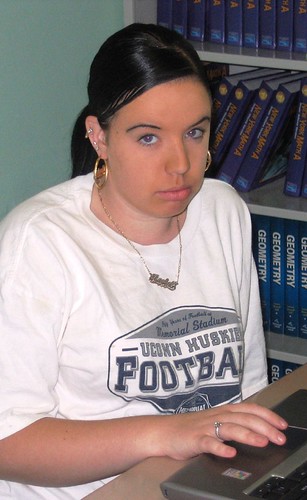
RACHEL PFLUGER: I like it here at New Beginnings because it isn’t easy for me to cut my classes because there are no hallways for me to cut and chill in. I actually want to come to school because it is easy to get your credits and it is easy for you to pass if you really want to learn.

This school is fun! When I was at Curtis I failed everything because I cut class and that school was boring. It’s more fun here and more interesting and here we go on trips and we do fun stuff. I think it’s better here for me because even if I wanted to cut I won’t because none of my friends from Curtis are here to cut with me, so cutting would be boring.

Here at New Beginnings I was on the honor roll and I didn’t fail anything and I’m still trying to keep my grades up. I was never on the honor roll before and I’m really proud of myself I never thought I could do it. But I did.

TERENCE LEGRAND: What I have learned from economics is how to live my life and not die to stay focused. I have learned factors of production and I am more familiar with the checks. I liked when I learned about when a check says paid in full. If someone complains about you not paying them and decide to take it to court you will not get in trouble with the law because that person accepted the check saying paid in full.

NICOLE CARRION: At my old school I was failing and I was way behind. When I came to this school I had a lot of focus because its small and it has small classes. Here there is no way for me to lose focus. I used to cut classes and now I don’t.

SEDRIK WILLIAMS: New Beginnings has affected my life because how I came to school. This is also the first time that I am passing classes in four years. I like this school because it has changed the way I used to think about teachers and counselors.

FELICHA REYES: How has New Beginnings helped me? By being given a second chance in a smaller school and given more attention I have better chance of passing. When I leave I will have more opportunities.

How far have I come? I realized that when I’m not here that is main reason why I’ve failed. Therefore, my goal is come everyday and pass. Do I like it here? Not all the time. Why? I'm not sure.

My favorite class? Art class because I like to draw and color. My favorite teacher is Mr. Garvey who teaches my Art class, he has a cool personality.

The last question is about friends. I’m not here to have friends, but I’m cool with everyone.

LINDSAY SORENSEN: New Beginnings has helped me do a lot better. They helped me to get credits, and helped me bring up my average. I am here because when I was in New Dorp I use to cut because it was so easy, but now in New Beginnings you can’t really go anywhere. In a way it’s good because you have a chance to do better and stay in school.

At New Beginnings they make learning fun so we’re not bored with the work.

Lunch is also a good thing here because we can listen to music, dance, go on the computer and I think its a lot better.

New Beginnings is a good place to be because they sit down, with you and make sure, you’re doing well and if you are not doing well they will take the time out to help me.

ANISSA TORRES: New Beginnings has affected my life by keeping me out of trouble and making me go to every class. I like New Beginnings, but sometimes it can be annoying. I didn’t come here to make any friends but I’m cool with everyone. My grades are good and I’m passing every class and my test scores improved and I’m very proud of that. I like every teacher and get along with all of them. All the teachers always help me if I need help and always offer even if I don’t ask. New Beginnings is a new start to put me on the right track and make me do better in the future.

Why is the US at the Bottom of the List?


“A country cannot be said to be doing the best it can for its children if other countries at a similar stage of economic development are doing much better – and that’s what the league tables are designed to show.” -- UNICEF Report

Last week, the news media featured the UNICEF study on the quality of children’s lives that reported the US as #20 of 21 economically advanced countries. Simultaneously, we received notice that there would be no RFP for 21st Century Learning Centers this year. After school programs will close. The funding has been cut.

The funding has been cut, but the US Treasury reported that during the last twelve months, tax receipts have grown by 11.5% while spending growth is only up 5.5%. Can't we afford to continue after school programs?

The UNICEF Report, from their Innocenti Research Centre in Florence, Italy, measures and compares child well-being across more than 20 economically advanced countries under six different headings – material well-being, health and safety, education, peer and family relationships, behaviors and risks, and young people’s own subjective sense of their own well-being.

Some highlights from the data include:

  • Relative child poverty remains above the 15% mark in the three Southern European countries (Portugal, Spain, Italy) and in three Anglophone countries (the United States, the United Kingdom, and Ireland).

The use of data on the proportion of children living in single-parent families and step-families as an indicator of wellbeing may seem unfair and insensitive. But at the statistical level there is evidence to associate growing up in single-parent families and step-families with greater risk to well-being – including a greater risk of dropping out of school, of leaving home early, of poorer health, of low skills, and of low pay.

  • Overall, approximately 80% of children in the countries under review are living with both parents. But the range is considerable – from more than 90% in Greece and Italy to less than 70% in the United Kingdom and 60% in the United States
  • Surveys of young people’s own perception of their own health show that, in virtually all of the countries for which data are available, girls report lower levels of health than boys and that this difference gradually increases with age.

Some of the areas where the US stands out negatively include:

  • Poverty rate (Household income less than 50% of the median) (21.7%)
  • Death rate, accidental and not, for children under 19 years (22.9 per 100,000)
  • Percentage of children living in single parent and step-family homes (36.8%)
  • Percent of students age 11, 13, and 15 who report using cannabis in the last 12 months (31.4%)
  • Birth rate among young women ages 15 – 19 (46 per 1,000)
  • Low percentage of youth who report eating breakfast every school day (47.2%)
  • Percent of 13 & 15 year olds who report being overweight (25.1%)

The Report Card recognizes limitations in the availability of internationally comparable data, but, bringing together the best currently available data, the Innocenti study represents a significant contribution to measuring child well-being across rich nations.

They report there is no strong or consistent relationship between per capita GDP and child well-being. The Czech Republic, for example, achieves a higher overall rank for child well-being than several much wealthier European countries. Also, no country features in the top third of the rankings for all six dimensions of child well-being.

Read more about the report

UNICEF RANKING IN FULL [Source: CNN]

1. Netherlands
2. Sweden
3. Denmark
4. Finland
5. Spain
6. Switzerland
7. Norway
8. Italy
9. Ireland
10. Belgium
11. Germany
12 = Canada
12 = Greece
14. Poland
15. Czech Republic
16. France
17. Portugal
18. Austria
19. Hungary
20. U.S.
21 UK

Monday, February 19, 2007

The Meaning of My Cultural Heritage and Identity


By Tristan D'Souza, Grade 623, Michael J Petrides School (P.S. 80)

Winner of First Place for Middle School Students, Celebrate Diversity 2006!

From time immemorial, cultural heritage and identity have played a major role in forming the lives of many people. By birth, I would be an American. But since my parents are Indian by birth, I have more of Indian than American culture. My cultural heritage has played an important role in my life. Like for instance, my parents have developed my intellectual faculties.

My cultural heritage has also influenced my behavior. Mostly everyone in the Indian culture has a peaceful lifestyle. Since my parents are two of those people, their teachings have made me a better person.

The Indian culture has also influenced me in many ways. These are a few ways:

-The Indian culture is one of the oldest and most unique cultures in the world. The Indian culture is a composite mixture of varying styles and influences. In the matter of cuisine, for instance, the north and the south are totally different. Color, gaiety, enthusiasm, prayers, and rituals characterize festivals in India. In the realm of music, there varieties of folk, popular, pop, and classic music.

-Christianity is one of the prominent religions in India. About 73% of the Christians are Catholics. In India, religion is a way of life being an integral part of the Indian tradition. The deep religious faith of my parents has made me a good Catholic thus shaping my life in a very special way.

-Indian cuisine is diversified in its varieties similar to its culture, races, and regions. Thousands of variations of dishes are prepared in the different parts of the country everyday. The essence of Indian cooking lies in the aroma of the spices, which are blended, together and added to enhance the basic flavor of a particular dish. Spices are always freshly ground to the required combination called Massalas. Many of these spices are noted for their medicinal values and are also used as appetizers. The ingredients, for the masala vary from region to region.

Rice is the staple food of the south while in the north it is supplemented or substituted by pooris, chappathis, or Nan. Dhal and Dhai are common throughout India. Vegetable dishes are prepared based on the main dish with which they are served. Rice is served with vegetable curries, vegetable side dishes, and curd. As India has a very long coastal area, dishes prepared with fish are also popular. The Indian culture is unique because of its diversity and its variety in physical, religious, racial, linguistic, and artistic fields.

Although the culture of the United States of America is a lot different from the Indian culture, it has still influenced me in many ways. Its culture is a western culture, and has been developing since long before the U.S.A. became a country. Its chief early influence was British culture, due to colonial ties with the British that spread the English language, legal system, and other cultural inheritances.

The United States has traditionally been known as a melting pot, but recent academic opinion is tending towards cultural diversity, pluralism, and the image of a salad bowl rather than a melting pot. Due to the extent of American culture, there are many integrated but unique substructures within the United States. The strongest influences on American culture came from northern European cultures, most prominently from Germany, Ireland, and England.

In conclusion, the Indian and American cultures have had a tremendous impact on my identity.

Thursday, February 15, 2007

What Countries Rank Worst for Childhood ?

According to a UNICEF study of 40 indicators, Britain ranks worst. Right after the U.S.

Britain ranked worst for childhood - CNN.com: "LONDON, England (Reuters) -- Britain is ranked last for childhood quality of life among industrialized nations, the United Nations Children's Fund (UNICEF) said in a report on Wednesday.

The charity looked at 40 indicators to gauge the lives of children in 21 economically advanced nations, the first such study of its kind.

The study found Britain lagged behind on key measures of poverty and deprivation, health and safety, relationships, risk-taking and young people's own sense of well-being.

Britain received better ratings for education but languished in the bottom third for all other measures, giving it the lowest overall placing, along with the United States."

You can see the ranked list and read the story at the link. I'll try to track down the study for us to review.

Wednesday, February 14, 2007

Is my child going to be safe visiting his other parent?

Such sentiments are often expressed in situations of intense conflict when parents are separated, divorcing or in court. The root of these sentiments exist on a continuum from:
  • concern over parenting skills
  • concern over an appropriate visitation environment
  • concerns for safety of self and child
What are the options of parents? One option might be supervised visitation.
Supervised Visitation is a service that provides non-custodial parent and child(ren) a safe and comfortable environment. The visits are in the presence of a third person who is responsible for observing and reporting the interaction between the child, the custodial parent, and the non-custodial parent.
New York Center has been operating a Supervised Visitation Program since September 2004. Our program was started to provide neutral parenting services to clients in the Integrated Domestic Violence Court. Since that time, many other individuals have contacted us to request services. The Supervised Visitation Program is addressing a critical need on Staten Island to keep families unified and strong, and children bonded to and nurtured by their parents.

Read our announcement about the Supervised Visitation Program here.

Click here to find out about Supervised Visitation on a national basis.

"The Relationship" -A mediator's growth opportunity?

So, why think about mediation on a day about romance and love?

On Valentine's Day, individuals around the country, perhaps even the world, seek to find and celebrate love, most often by saying sweet nothings, giving gifts and showing intense intention on the person of their affection. (One exception might be in Japan where there are separate holidays for men and women, see White Day). During this focus on love, we tend to get all hyped up in "The Relationship," and The Romance. (For those who are single, we might talk about hopes and dreams for them and seek kinship with other singles or family and friends). Valentine's Day has become a day when we want to know that we are loved. Many of the signs of love are those the world can see or that they can hear about in a story. The high expectations can result in estacy or despair.

Again, the question, why talk about mediation on Valentine's day? Dina Beach Lynch suggest that mediators might be "love coaches" I know that the skills of mediation have helped me in my personal relationship to create space and structure for conflict and difference. Why then, not offer this to the relationships of our clients - a purpose driven mediation, seeking to assist individuals in a relationship to engage in constructive dialogue about issues of concern. Laurie Isreal also suggests that mediation can help people stay married. A provocative idea.

Why not consider mediation then on this day of love and how it can enhace our relationships?

Happy Valentines Day.

Monday, February 12, 2007

Mediation To Stay Married

I love finding new applications for mediation. Here's one I haven't seen before from Laurie Israel. Her website offers some interesting case examples, if you're interested.

Mediation To Stay Married: "'I started this area of practice after years as a divorce attorney, encountering couples who regretted not working on their marriages when they had the chance. With this in mind, I looked for another way to help. With the expanding legality of postnuptial agreements and the effectiveness of marital mediation, I try my best to bring people back together, and make the marriage work. People need to know that there are resources for them!'"

Lawyers Alliance for New York: Connecting lawyers, nonprofits, and communities

This post is a bit out of date, but I recently received the picture of Dom (r), Candace (c)(our ED and Sr. Director of Operations), and Robert Whitman (l). Robert has provided the NY Center terrific advice and wisdom, so we can't let the opportunity pass to, once again, say thank you.

Lawyers Alliance for New York: Connecting lawyers, nonprofits, and communities: "New York, NY, December 12, 2006 --
Lawyers Alliance for New York announces the recipients of its 2006 Cornerstone Awards. Each year, the Cornerstone Awards recognize outstanding pro bono legal services provided to nonprofit organizations by law firms and business lawyers.

One of those lawyers is Robert S. Whitman, Seyfarth Shaw LLP, formerly of Orrick, Herrington & Sutcliffe LLP, for providing a decade of quality guidance on a range of ongoing and urgent employment law matters for organizations such as African American Planning Commission, Bailey House, City Futures, Historic District Council, New York Center for Interpersonal Development, Ridgewood Older Adult Center & Services, and Supportive Housing Network of New York.

Tuesday, February 06, 2007

Teen Dating Violence Awareness and PreventionWeek • Feb. 6–10, 2006


"One in five female high school students reports being physically or sexually abused by a partner."

American Bar Association • Teen Dating Violence Awareness and Prevention Week • Feb. 6–10, 2006:

Visit the ABA's site. You'll find a toolkit of materials you can use with your program participants.

Teen dating violence does not discriminate by gender, race, socioeconomic status or geography.

Teens in your programs need your support to resist or get out of potentially violent relationships.