Showing posts with label Parent Resources. Show all posts

Tuesday, October 02, 2012

Preparing for High School Success (GPS)


[Getting a good start in high school]

Youngsters entering high school as freshmen with poor middle school attendance tend to continue their attendance problems – often the first step for dropping out. GPS (Graduate, Prepare, Succeed) can change that path.

At Port Richmond High School, NYCID provides those freshmen and continuing GPS sophomores, male and female, academic advisement and counseling on a daily basis. That support helps students overcome barriers to strong attendance, academic achievement, and healthy peer interactions. This provides extra credits for both freshman and sophomore students.

Their age ranges from 13 to 18 years old. 

The GPS program operates 7:00am to 2:45pm throughout the school year (0 period to 9th period) and most attend the Advantage After-School program  as well.

Sophomore Student reflecting on GPS: “It is fun, you go on fun trips. It’s cool to do the marking period luncheon. The staff is nice, easy to talk to, and there when you need them. 0 period benefits me. I love the breakfast on Friday mornings. I really like coming down to the office. I feel comfortable and happy when I am in the office.”

GPS Incentives – Students are rewarded for their success in academics, behavior and attendance. Such rewards include trips, movie tickets, baseball tickets, breakfast once a week, semester luncheons, tutoring, credit recovery, and celebrations.

Enrollment – over the summer months staff reaches out to incoming freshman and family based on poor student middle school attendance. Parents, guardians, and students meet with staff to explore middle school academic history and conduct a bio/psycho/social assessment and establish student contact information. The program is free to all eligible.

For additional information: Graduate Prepare Succeed (GPS)

Michael Candella, Program Director
718-815-8124
Mikecnycid@aol.com
85 St. Joseph’s Avenue
Staten Island, NY 10302

Enhanced by Zemanta

As a parent I'm trying to keep lots of balls in the air

[parenting issues - scroll down to read the letters and responses]


[NYCID's after school programs]

Dear Nancy and Sid,
Being a parent isn’t easy these days. I need a place where my kids will have a good time after school and get help with their homework. Any suggestions? – A working parent

Dear Working Parent,
You can look at several possibilities depending on their age, location, and resources. If they are in elementary school, try  one of these programs: 


If you have a high school student who can benefit from an after school program consider the NYCID Advantage programs:


[Parenting Workshops]

Dear Nancy and Sid,
My spouse and I are separating and the judge says we each have to attend a parenting workshop at the NY Center. Is this going to be a waste of my time? What does he think I can learn? – Annoyed Parent

Dear Annoyed,
Here’s what judges have learned and why they may require you to attend an ACT Assisting Children Through Transition  parenting class. 

One participant’s child told him, I can see a big difference. They can talk to each other now without yelling. That helps a lot. My stomach doesn’t hurt as much and I can concentrate better in school”and here’s what a parent said, This program changed our lives. It gave us all a new direction…one of hope and healing. I see too many people oozing with anger…I don’t want to go there anymore.” This judge knows that every parent going through a separation needs to focus on how to help their kids cope. 

Believe us, it won’t be a waste of your time. Read more about this ACT workshop here.

Dear Nancy and Sid,
I never thought my teenager would be so difficult to deal with. Home is getting to be a warzone. It’s a problem for us all, and he used to be such a nice little kid. Now he just doesn’t listen to us. What can we do? – Miserable Mama


[raising adolescents]

Dear Miserable Mama,
Adolescents everywhere battle with their parents, but you and your family can learn to “fight better” through our family mediation program. Check it out. Everyone wins.

[custody and visitation plans]

Dear Nancy and Sid,
My kids’ other parent and I are fighting over custody and visits, but I don’t want some judge deciding what we have to do. Is there another way? – Robert

Dear Robert,
You and your co-parent will be raising your children for many years, so you’re wise to want to solve these issues together yourself.

NYCID’s conflict resolution staff can help you work together to develop a custody and visitation plan that works for you both and learn how to renegotiate that plan as life changes. You can bring your agreed upon plan to the judge.

Give us a call at 718-815-4557 to learn about developing your own joint plan that you can bring to the judge. 

Read more about getting help to work out the best parenting plans on the conflict resolution page.

Enhanced by Zemanta

NYCID After Care at PS 30 on Staten Island

[after school program at PS 30]


Program Description
  • Elementary school children, ages 5-12, from PS 30
  • Mon-Fri from 2:20-6:00pm
  • Homework assistance from PS 30 after-school staff
  • Enrichment and recreational activities.
  • A low staff/student ratio (1:10) provides better supervision and an opportunity for each child to form relationships with our professional staff members.
Student can also attend our After-School Activities Program which can include programs like: Dance, Team Sports, Newspaper Club, Theater, Legos, Basketball, Fencing, Art through Literacy, Cheerleading, Martial Arts, and ELA/Math Prep.  Students enrolled in our After-Care program receive a discount when enrolling in the Activities Program.


Recruitment and enrollment process and schedule


  • After-Care enrollment is ongoing.  
  • Activities run 3 sessions of 10 weeks.
  • Request an information package about activities and registration


For additional information contact: 
Ivy Bilotti, After-School Child-Care Director
646-457-5438
ivybilotti@yahoo.com
NY Center After-School Program @ PS 30


Enhanced by Zemanta

Tuesday, July 24, 2012

When Co-Parenting, Kids Come First

1cparent.jpg

Anthony Altobelli, in the background, poses with three of his four children, Lauren, 19, Anthony, 6, Christopher, 8. Newly divorced, the South Beach resident praises the Parent Assisting Children Through Transition course for teaching him to help his children adjust to a new life.
It’s easy to have tunnel vision when going through a divorce, getting wrapped up in who gets what and letting anger and despair color perceptions.
But when parents get swept up in their own drama, their judgment becomes clouded and they inadvertently neglect the most important part of the equation — their children, who are likely to have the toughest time dealing with the breakup of the family.
A state-run and monitored program helps divorcing/separating couples understand the devastating impact a divorce can have on kids and provide ways to diminish negative side effects.

Parent Assisting Children Through Transition, created by the New York Center for Interpersonal Development in 2006, provides a framework for reducing conflict, strengthening parent-child relationships and fostering children’s healthy development.

Though the majority of parents who participate in the six-hour course have been ordered by the judge presiding over their divorce to attend, those who wish to improve family dynamics and master new parenting skills can register, too.

Acting Supreme Court Justice Barbara Panepinto, who has handled thousands of divorce cases, says she usually sends couples to the course “when there is a disagreement about parenting” — i.e., a conflict over custody and visitation or, as the courts call it today, “parental access.”
HIGH PRAISE FOR COURSE
2coparent.jpg
Anthony Altobelli, right with his 16-year-old son, Salvatore. 
The 50-year-old South Beach resident credits a course 
for helping him and his family cope with his divorce.
Anthony Altobelli says he’s blown away with what he learned in the course, so much so that he is determined to get the word out about the benefits.

“It’s an enlightening experience for anyone going through a separation,” the South Beach resident enthused.

The 50-year-old father of four admits he initially was reluctant to attend, but by the end of the class he felt revitalized. Altobelli believes the program gives people a blueprint “in how to rebuild your life and move forward.”

Though Altobelli says he “spends a lot of time” with his kids during the week — he explains he shares custody with his ex and is a manager and coach of his two youngest sons’ Little League teams — the course was a lesson in “how to put yourself second and your children first.”

He says he also learned how he and his ex-wife can handle joint celebrations like birthdays and holidays.

A Richmond mother, who wishes to remain anonymous due to the contentious nature of her divorce, says the class helped her to establish strategies to avoid conflict with her ex as well as understand what her children are going through.

“I know my son is stressed,” she says, confiding lately the 5-year-old has become a bit defiant, while her 13-year-old daughter has been struggling at school.

“That’s their way of acting out. They’re hurting inside,” she says. As she learned in the program, they struggle with articulating their feelings.

Nancy Nybergh, an instructor of the class and a licensed psychoanalyst who works for the city Department of Education, warns that the “level of conflict [between divorcing spouses] can have a huge impact on children’s success in life.”

Things like portraying a co-parent in a negative light or having heated arguments in front of the kids can have detrimental psychological effects on them.

To help co-parents avoid these destructive behaviors, Ms. Nybergh teaches them how to manage their anger, recognizing their triggers and identifying techniques to cope with it.

She also tries getting parents to identify with what their children may be experiencing, like believing the split somehow is their fault and wishing Mom and Dad will get back together.

“Once parents are aware of these things, they usually have empathy for their children,” she says.

Additionally, the course demonstrates to parents they are not alone in this difficult transition.

Notes Ms. Nybergh, “It has a normalizing effect as they process the emotions that come from divorce, such as grief and loss.”
HONING COMMUNICATION SKILLS
The psychoanalyst also works with parents in boosting their communication skills, teaching them how to paraphrase what the other person says to show they’re listening, and the importance of “I,” as opposed to “you” statements. Such as: “I get annoyed when you’re late dropping Johnny off — not “You’re always late dropping Johnny off,” which puts the other person on the defensive.
Altobelli says the class made him realize the importance of using these techniques, motivating him to “choose [his] words more carefully” and “think before [he] spoke.”
They have been especially effective strategies with his kids, he says, noting he now understands more fully what they are experiencing.
“It’s amazing, the change. We communicate a lot better now,” he says, adding it has led to other positive changes.
“You know these things in the back of mind, but the course really hit it all home,” he concludes.
By Elise G. McIntosh/Staten Island Advance. Published: Tuesday, July 24, 2012
Elise McIntosh, editor of the Relationships section, may be reached at mcintosh@siadvance.com.
© 2012 SILive.com. All rights reserved.

Wednesday, February 22, 2012

NYS Deputy Director of Civil Rights hosts live web chat Feb. 24 at 11 a.m., on new program for businesses and at-risk youth

Governor Andrew M. Cuomo signed the NY Youth Works Program into law on December 9, 2011, to encourage businesses to hire unemployed, disadvantaged youth.  New York State Deputy Secretary for Civil Rights Alphonso David will be hosting a live web chat this Friday, February 24, at 11 a.m. to introduce the program and answer everyone's (businesses, youth, parents, agencies, etc.) questions.

More about NY Youth Works
NY Youth Works is a statewide program to combat the unacceptably high unemployment rates among inner city youth in communities across New York. The new program includes $25 million in tax credits for businesses that hire unemployed and disadvantaged youth and $62 million to support job training programs.  (Click here to learn more about the NY Youth Works program.)

For Youth (Ages 16-24) – This program can help you get a job! Plus, you may earn up to $900 to cover your expenses if you get training from an authorized NY Youth Works provider. Click here for more details.

For Businesses – Your business can earn tax credits of up to $4,000 for eligible youth starting work between January 1, 2012 and July 1, 2012. Your business must be certified to participate in the program. The process is easy; click here for details.

Do you have questions about the program, and how it applies to you, your friends or your family? Click here to submit a question (and share on your facebook wall)!  You can visit this site on Friday at 11 a.m. to participate in the live chat.  A transcript of the chat will be posted online here after the chat.

Wednesday, November 16, 2011

The Bach Family: Raising Young Philanthropists:


Nine year-old Henry Bach (who participates in our After-School Enrichment Program at P.S. 30 along with his sister Madelyn) pledged $100 to NYCID at our Annual Benefit this past June.  We were so impressed with both Henry and his sister Madelyn's generosity that we asked them, and their father Ken, to share their stories with us.

Henry

How old are you & what grade are you in?  I'm nine and I'm in fourth grade.

What activities do you participate in through NYCID’s After-School Program?  I did fencing and Legos. Legos was kind of boring because it wasn't really Legos and fencing was awesome. I got to sword fight with some of my best friends and learned that fencing is a lot like light sabers. 

What are your favorite hobbies/subjects?  My favorite hobbies include basketball and baseball. My favorite subject is social studies because we get to learn about presidents and do interesting research on them. 

How did you raise the money you donated?  I've made lemonade stands with my sister and I save my birthday money. If my dad offers me $5 to spend at the dollar store, I usually only spend one or two. 

Why did you want to donate? What inspired you to want to give to NYCID?  I wanted to donate because my dad works with people at NYCID and it helps my school. It helps me make friends in the programs.  I want to compliment Dominick and the man from Camelot on how nice they were. 

What do you hope the money you donated will accomplish?  I hope the money makes more programs to help more people and make them happy. I hope it keeps people out of hobo shelters. Giving the money makes me a better person. 


Madelyn made the winning bid on the silent auction item for a party at the Staten Island Zoo

How old are you & what grade are you in?  I am ten years old and I'm in fifth grade.

Madelyn Bach
What activities do you participate in through NYCID’s After-School Program?  When I was in fourth grade I participated in the drama program. It was fun because I made new friends. Also we did fun exercises. I learned “Bruno the Bear sits in the sun munching lots of honey buns.”  We had to say it in a funny voice to exercise our voices.

What are your favorite hobbies/subjects?  I like to sing and dance. My favorite subject is PE because you're sitting in a classroom all day and you get to exercise and hang out with your friends. I like art class because you learn about artists and you learn how to paint.

How did you raise the money you donated?  My friend and I sold lemonade from her front yard to the neighborhood and some really annoying and gross kids. But money is money! I also save my money from my birthday.

Why did you want to donate? What inspired you to want to give to NYCID?  I donated money because I wanted to help support the program and help families in trouble and because I really wanted a Zoo party.

What do you hope the money you donated will accomplish?  I hope the money I donated can help people.


Their Father, Ken Bach, Shares His Perspective

How did you teach your children about charitable giving? Leadership by example is more than a catchphrase on a motivational poster. Children are amazing.  They learn from every clue around them.  I haven’t taught them about charitable giving – they have learned by what we do.

Through Rotary, I have been giving back to the community for many years.  My children ask about Rotary and where I am going. I always tell them, “I am going out to change the world!”  Later, as we drive around the island, I show them where we’ve served holiday meals to the homeless, where we assembled turkey baskets and the neighborhoods we deliver to, and the parks that we help maintain.  This year, they are both eager to join me on these and other projects. 

Often we get, “Why do we need a babysitter again tonight?” Well, a frequent response begins with “Because Mommy and Daddy are going to a fundraiser.”  We let them know the goal might be to help raise scholarships for really smart students who can’t afford college or the local Boy Scout troop or children with autism.  When they heard we were attending the NYCID event, and that it was the organization that ran the after-school programs that touched their lives, there was no keeping them away.

Ken and Henry Bach
Were you surprised by Madelyn & Henry’s actions at our benefit? I was surprised at how comfortable they felt at the event, and that Henry actually chose to wear a button down shirt without being asked.  Madelyn was intrigued by the silent auction items, and I was proud that she came to us and informed us that she wrote her name on the item of her choice.  We approved her bid amount and she was amazed she won, especially since Mom and Dad won nothing.

And yes, I was shocked by Henry’s energetic and unanticipated hand raising at the $1,000 challenge request, amused at his persistence down the scale, and proud of his $100 contribution.  They still talk about the event, further spreading the culture of giving with their friends.   

Do you talk with them about people that need help? Given my job, family activities and our community, there are always conversations.  Part of parenting is helping the children to make sense of the millions of clues they need to assimilate.  It is important my children acknowledge they may not have as many material goods as some, but that they do have more than many.  They know when to accept help and when to provide help.  

Is this the first time they’ve made charitable contributions?  Henry and Madelyn have a long history of compassion and giving back, although this was the first time in such a sophisticated setting.  While attending elementary school in upstate NY, Madelyn hosted a web-based TV show where she interviewed the administration and staff.  She was honored by the City of Kingston for her artwork, which was later placed into a gallery that helped raise awareness of the dangers of swimming after the unfortunate drowning of an eight-year-old.  Madelyn and Henry also organized sledding parties where kids brought new, wrapped toys that we delivered to local children in need.   Recently, Madelyn hosted a lemonade stand to raise money for her CYO basketball team, and they both want to volunteer for the Parks Department.

Do you have any advice for others?  As you enjoy the company of friends, remember those who are lonely.  As you embrace your family, remember those who are in conflict.  As you sit down to dinner, remember those without a meal.  Donate and help make a difference.  Volunteer and change a life. You may be surprised that the life that most benefits from the change is your own.   

Is there anything else you would like to share?  NYCID’s outreach programs provide a rich after-school curriculum to help expand a child’s horizons for working and stay-at-home parents, and their conflict management programs help people learn how to emerge victorious from a seemingly hopeless situation.

Also, walk the Greenbelt. Look at the nighttime sky. Relearning our place in the universe is a great way to put our existence into context.

Do you have some suggestions about how to grow young philanthropists? Please share them in the comments below.

Tuesday, November 15, 2011

Developing the Habit of Philanthropy in Children


Here are some additional resources for helping to teach children about philanthropy:
        You'll love these young philanthropists. They will inspire you, as they have inspired us.
        Here's one of our favorites, #3 Timothy Hwang and Minsoo Han:

        In 2007, Timothy Hwang and Minsoo Han started Operation Fly, when they were only 14 years old. Their non-profit business offers cut-rate tutoring services to inner city students, and then uses the revenues to distribute blankets, clothing and soap to Washington D.C.’s homeless. Their organization has since spread to five cities, involves over 800 volunteers and is entirely student-run. For his efforts, Ernst & Young and Junior Achievement named Timothy Hwang the 2009 Youth Entrepreneur of the Year for the Greater Washington Region. 
        Here are some additional links.

        Wednesday, September 14, 2011

        Young Adult Borough Center (YABC) at Tottenville H.S.

        It's Not Too Late To Graduate!
        In partnership with the NYC Department of Education, the Young Adult Borough Center (YABC), located at Tottenville High School, offers students in danger of dropping out a chance to make up their credits and earn a traditional high school diploma by providing them with a rigorous academic program, tutoring, supportive counseling services and career preparation trainings.

        Students must:
        • Be 17 ½ - 21 years of age
        • Have at least 17 credits
        The YABC also offers students an opportunity to work in professional paid internships, which in some cases can result in elective credit.

        YABC students attend class Monday through Thursday from 4 - 8:30 p.m.

        For more information, contact Program Director Michael DeVito at (718) 947-4065.

        Wednesday, February 02, 2011

        (What’s So Funny ‘Bout) Peace, Love & Understanding

        The recent tragedy in Tucson, AZ, has brought to the surface some important questions about how we, as a society, communicate with people who have different viewpoints from our own. I know it's made me think about how I communicate with friends and associates that have different beliefs than I do.

        We all have been guilty of it in one form or another – name calling; believing we are right and anyone who disagrees with us is wrong; using violent language or imagery, etc. Our intent may be harmless but the impact is anything but. It doesn’t take long to think of a few recent examples, whether it was an elected official responding in a hostile way to a constituent they didn’t agree with, the person who was upset by the bipartisan seating at the State of the Union address or one of the usual suspects that comment negatively on any given story posted on SILive.com.

        How did we get to this point? While thinking about it, the following lyrics came to mind:
        “As I walk through this wicked world searchin' for light in the darkness of insanity. I ask myself, ‘Is all hope lost? Is there only pain and hatred, and misery?’” – Elvis Costello
        I admit to being too cynical at times, and often find myself questioning whether things will really get better, and if people can behave more compassionately toward one another.

        I think it is possible, if we make a conscious effort to think before we speak, pause before we act and try to put ourselves in the other person’s shoes.

        One of our board members recently told me about the following clip, and I encourage all of you to watch it. In this video, Elizabeth Lesser, co-founder of Omega Institute (the largest lifelong learning center focusing on health, wellness, spirituality, creativity and social change in the U.S.) suggests an interesting concept: taking “the other” to lunch. She offers some guidelines, and talks about her own experience going to lunch with someone whose viewpoints are radically different than her own.

        I plan on trying it – will you?

        -- Amy Lavelle, Development Associate

        Tuesday, November 23, 2010

        Co-Parents Need To Learn How To Share

        Reprinted from the SI Advance.

        Co-parents need to learn how to share
        By: Elise G. McIntosh

        STATEN ISLAND, N.Y. -- Thanksgiving, Hanukkah, Christmas, New Year’s — they can be a landmine for co-parents to navigate. Just-divorced exes, not yet settled into a co-parenting groove, especially may struggle with ironing out who will get the kids during the holidays and other issues that crop up.

        Sequoia Stalder and Cara Raich, partners at Stalder Raich, a Manhattan-based family and divorce mediation firm, say the key to co-parenting during the holiday season — anytime, really — is plenty of planning and communication.


        Stalder, who also serves as the director of Conflict Resolution Services at New York Center for Interpersonal Development in St. George, suggests co-parents speak about the holidays well in advance so everyone — including the kids — has clear expectations about what’s going to happen on those days.

        When making arrangements, he suggested co-parents have the conversation close enough to the holiday to have a realistic idea about plans but far enough to make modifications, if need be.


        “It differs for each family,” he said, but generally planning six to eight weeks before the holiday works well.

        Stalder also said having a yearly holiday plan in place — while still remaining flexible for the surprises that inevitably come up — can help reduce stress and aggravation.

        Ms. Raich noted many co-parents they have counseled alternate having the children for the holidays.

        Each family has to decide which method works best for them, but one system that works well is switching according to the calendar year. For instance, Dad gets the kids for Christmas during years that end in even numbers while Mom has them during odd-numbered years.

        Ms. Raich says it also is helpful for co-parents to view the holidays as a block of time that can be divided up. Christmas, for example, may be broken up into eve, morning and night, giving kids the opportunity to spend a portion of the holiday with both Mom and Dad.

        Co-parents also should discuss the logistics of picking up and dropping off the children during the planning stages, said Ms. Raich.

        “Be as specific as you can,” she said, explaining, “Discussing the small details can help in diffusing conflict.”

        Flexibility and a forgiving attitude also go a long way. If your ex is late or suddenly makes a change to the plans, “try not to access the angry place first,” said Ms. Raich.

        Rather, she encourages an ex-spouse to see it from his/her co-parent’s perspective and try to understand why he or she needed to revise the plan.

        When picking up/dropping off the kids to/from a holiday celebration, avoid having an involved conversation with your ex.

        “This is not the time to have a substantial talk,” Ms. Raich said.

        Stalder said co-parents need to be mindful of their communication. If a hostile tone starts creeping into the conversation, make sure the kids aren’t within earshot.

        “You don’t want to expose them to your conflict,” he explained, noting it can do damage, emotionally.

        To avoid getting into a heated discussion, Stalder recommends “I” messages.

        “Focus on your feelings versus accusations,” he said. “Really try to express what’s important to you rather than blaming the other side.”

        If tensions between you and your ex continue to flare, it may be prudent to have a consultation with a mediator like Stalder and Ms. Raich, who work with co-parents in reaching mutually beneficial solutions.

        The New York Center for Interpersonal Development also has a family mediation program that helps divorcing spouses deal with custody and visitation issues. The services are free to Staten Islanders. To learn more, call (718) 815-4557 and ask for the Mediation Center or visit nycid.org.

        Tuesday, March 02, 2010

        Class helps co-parents deal with their issues | SILive.com

        Last week our ACT class received some nice press in the SI Advance.

        Class helps co-parents deal with their issues | SILive.com: "Class helps co-parents deal with their issues
        By Elise G. McIntosh
        February 25, 2010, 4:03PM

        Feuding with your co-parent? The New York Center for Interpersonal Development has just the class for you.

        Parent A.C.T. (Assisting Children through Transition), the Staten Island component of the state-run Parent Education and Awareness Program, is designed to educate divorcing or separating parents about the impact of their breakup on their children.

        The primary goal of the program is to teach parents ways they can reduce the stress of family changes and protect their children from the negative effects of ongoing parental conflict.

        'The main themes of the program are to help parents reduce conflict through better communication and conflict-resolution skills and gain more awareness on how putting children in the middle can negatively affect them,' said Regina Shields, coordinator of the class.

        The workshop is offered either as a six-hour class on Saturdays or two three-hour classes during weekday evenings.

        Ms. Shields also said the class can help parents acknowledge all the negative emotions they are feeling after a drawn-out divorce process.

        'Next to death, this is the most traumatic experience a family can go through,' she said, noting parents may be so focused on their own feelings of frustration, guilt, blame and depression that they forget their kids are suffering just the same. Ms. Shields said this realization is a 'real eye-opener' for co-parents.

        Communication also is a big focus of the class. Participants learn about active listening, speaking calmly, 'I' statements – 'all the things that can really help de-escalate the conflict quickly,' she said.

        The class also helps participants identify their goals as co-parents.

        'Nine out of 10 times people are much happier and come out of the class understanding the situation much better,' said Ms. Shields.

        For more information or to enroll in the class, call 718-947-4048. The cost is $100; there is a sliding scale fee."
        Reblog this post [with Zemanta]

        Thursday, January 29, 2009

        How to talk with teens about current events

        Urban Moments. Teens TalkingImage by Slaff via Flickr

        Whether you’re a parent, grandparent, teacher, or employer, we encourage you to talk with the teens you know about current events.


        · BUILD IN TIME TO TALK together about world events frequently. News about war, terrorism, the economy, politics and natural disasters is everywhere. They need a chance to make sense of what they hear. President Kennedy’s father held a daily discussion of current events at the dinner table.


        · ASK WHAT THEY’RE HEARING FROM OTHERS – sometimes that’s an easier place to start. Correct inaccurate information, or research issues together on the internet.


        · CONNECT THE ISSUES TO PEOPLE THEY KNOW -- Who has lost their job? Who is serving in Iraq? Or, how could this effect people we know? Teens master abstract issues by connecting them to their own lives.


        · SHARE YOUR PLAN FOR COPING, if the impact is on you and your family. Have a plan teens can participate in. Whether it’s a plan for how to connect with family in a catastrophe or how the family will cut expenses to deal with the economic changes, teens need a role.


        · BE AWARE OF THE IMPACT ADULTS CONVERSATIONS MAY HAVE on teens and children who overhear them. Give them a chance to participate in the discussion then, or in a follow up conversation later.


        · EXPLORE THE PROS AND CONS OF MANY POINTS OF VIEW. Learning to think for yourself requires trying ideas on for size and accepting or rejecting them in whole or in part.


        · ACT AS A MODEL FOR YOUR CHILDREN. Always show respect for differing views, including theirs. You know you’re being respectful if your teen can have a different point of view without you trying to “win” the conversation as though it were a debate. Acknowledge that in a democracy like the US people can have strong and differing opinions about momentous events.


        For more information about how to talk with teens about difficult topics, check out these sites:

          Kiplinger.com Talking to Teens About the Financial Crisis

          Tips for Parents/Teachers/Emergency Response workers for talking about Traumatic Events – links to a number of articles

          Coping with Traumatic Events: Parent Guidelines for Talking with Teenagers about War and Terrorism from SAMHSA’s National Mental Health Information Center


        Reblog this post [with Zemanta]

        Thursday, December 11, 2008

        Our Job - Keeping Kids in School

        John Jay College Visit 3Thank you, Gates Foundation. Many of the high school students we work with, and their parents, believe that college is out of their reach today. They believe that they just can't afford it or that the sacrifices would be too great. We work hard with them, helping them complete financial aid forms, looking for scholarships, rehearsing alternative scenarios, but it's easy for us to get discouraged, too. So, thanks for paying attention, Gates Foundation. Thanks for the help.

        Gates Grants Aim to Help Low-Income Students Finish College - NYTimes.com: "“The people who survive the best have always been and continue to be the ones with postsecondary education,” Dr. Carnevale said, adding that the unemployment rate for people without a college education was generally four times as high as for those with a two- or four-year degree.

        Most of the foundation’s money would go not directly to students but to programs intended to help them make it through college.

        The Gates Foundation said that doubling the numbers of low-income students who earned a postsecondary degree or vocational degree by age 26 would translate into an increase of about 250,000 graduates each year.

        The goal is attainable, said Dr. Carnevale, whose research shows that each year there are 560,000 students who graduate in the top half of their high school class — and have the test scores that show they could succeed in college — but who fail to earn a two- or four-year degree within eight years of graduating."
        Reblog this post [with Zemanta]

        Saturday, March 08, 2008

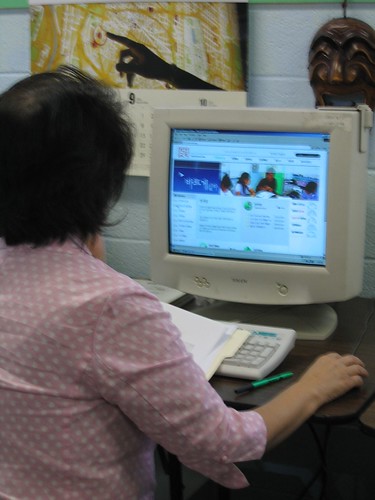
        Adult Education Computer Courses Free at McKee


        Free Adult Education
        Do you want to learn computers for FREE?
        We are offering FREE technology classes in Staten Island
        The New York City Department of Education, Office of Adult and Continuing Education offers technology evening courses for adults twenty-one and older at McKee High School
        Learn computers in one of four different computer classes:
        • Computer Literacy
        • Word Processing/ Keyboarding
        • IC3
        • Internet/ Desktop Publishing
        OR
        • Basic Automotive Service
        When: Classes meet TUESDAYS AND THURSDAYS, 6:00 pm to 9:00 pm
        Where: Ralph R. McKee Career and Technical High School
        290 St. Marks Place, Staten Island, New York 10301
        CALL TO REGISTER: 718-420-2697

        Friday, January 25, 2008

        Bill of Rights for Children whose Parents are Separated

        If you are separated from your child's other parent, take these rights to heart.

        If you want to learn how to manage your relationship with your child's other parent, consider our ACT class.


        Bill of Rights for Children whose Parents are Separated

        1. The right to freedom from pressure to “choose sides” between parents

        2. The right to freedom from the details of the legal proceedings between parents.

        3. The right to freedom from hearing negative comments about the other parent’s personality or character.

        4. The right to privacy when talking to a parent on the telephone.

        5. The right to freedom from “cross-examination” about visits with the other parent.

        6. The right to freedom from the role of messenger between parents

        7. The right to freedom from requests to lie to the other parent.

        8. The right to freedom from the role of confidant in adult matters.

        9. The right to express feelings, whatever those feelings may be.

        10. The right to choose to withhold feelings.

        11. The right to protection from parental “warfare.”

        12. The right to freedom from pressure to feel guilty for loving both parents

        For More Information or To Register Please Contact:

        A.C.T. Program Administrator

        Telephone (718) 947-4048

        A.C.T. – For the Children


        Reducing the stress of a breakup on children

        Read the Bill of Rights for Children Whose Parents Are Separated

        “I can see a big difference. They can talk to each other now without yelling. That helps a lot. My stomach doesn’t hurt as much and I can concentrate better in school. -- a child

        What is A.C.T. – For the Children?

        A.C.T. – For the Children (Assisting Children through Transition) is a program designed to educate divorcing or separating parents about the impact of their breakup on their children. The primary goal of the program is to teach parents ways they can reduce the stress of family changes and protect their children from the negative effects of ongoing parental conflict.

        “The program changed our lives. It gave us all a new direction…one of hope and healing. I see too many people oozing with anger…I don’t want to go there anymore.” --- a mother

        Who are the instructors?

        The classes are conducted by psychologists, family therapists, social workers, judges, lawyers, and mediators in a classroom setting. Instructors will provide information through lecture, video tape, role-play, and discussion.

        What is the program format?

        The program consists of two, 3 hour sessions held one week apart. The program will involve lecture, video, and group activities. This program does not provide counseling or support services. Classes are limited to 40 people. Please note, you will not be placed in the same class as the other parent of your child(ren).

        Is this program for everyone?

        A.C.T. – For the Children may not be appropriate when domestic abuse is present. If you are involved with an abusive partner, you should call the A.C.T. Program Administrator at (718) 947-4048 for further information before enrolling.

        Is there a fee for the program?

        The program fee is $100. A $10 non-refundable deposit is required at intake. A sliding scale fee is available for eligible clients. Eligibility will be determined at intake. Acceptable methods of payment are cash or money order only.

        Are there any materials provided?

        Participants will be provided with a Resource Manual and Handbook for Parents which contains a compilation of places where parents and children can find help and support, a list of helpful reading materials, and informative articles.

        When and where are classes held?

        Please refer to the confidential enrollment form for a listing of class dates and times. Classes will be held in the St. George neighborhood of Staten Island, unless otherwise informed. The specific location will be given when registration is confirmed.

        What are the attendance requirements?

        You must attend both classes to receive a Certificate of Compliance. Sign-in sheets will be used to ensure compliance.

        If you fail to attend a class for which you have registered, you will need to submit a new registration. You will not be registered in another class until all new applicants have first been placed.

        Children are not permitted to attend classes.

        “It was such an excellent program. The message of healing and rebuilding a positive parenting relationship is so important…there will be two healthier children because of it.” ---- a father

        For More Information or To Register Please Contact:

        A.C.T. Program Administrator

        Telephone (718) 947-4048